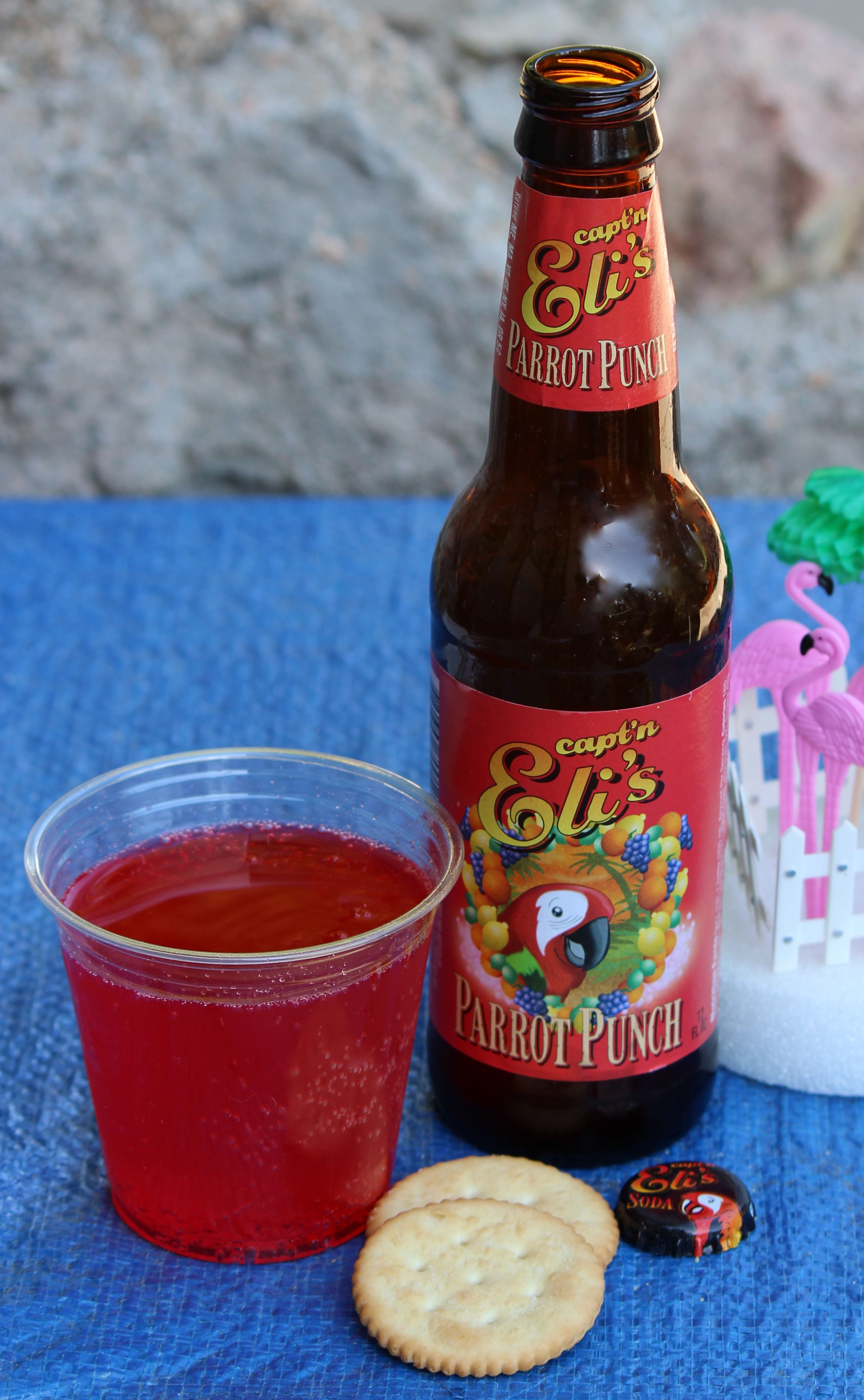
The Fizz: Capt’n Eli’s Parrot Punch

Maine is known for lobsters, but who’d take a swig of lobster punch? The choice for Shipyard Brewing Co. of Portland was parrots – Parrot Punch, as in “let’s play pirates!”
Yo-ho-ho!

Yo-ho-ho!

Childhood inspired Shipyard to make soda. In the 1920s, the story goes, young Eli Forsley made a business of sneaking down to the basement to get some of the family’s home-brewed root beer to give to friends and to sell. The boy grew up and served in the Navy, and when he returned and started his own family, he continued his parents’ family tradition of brewing root beer in the basement.

Capt’n Eli’s soda is a homage to him from one of his sons. The brewery started with beer and, in 1996, it began making root beer. The company now bottles eight flavors that might make you remember when the beautiful school-free days of summer ended with a trip to the corner market. Parrot Punch hearkens back to the stuff in the big can or to the cocktail – takes yer choice! Arghhh!

What’s in it: Water, cane sugar, natural and artificial punch flavors, citric acid, sodium benzoate (preservative).

Appearance: Bright red, cloudy with big bubbles bursting on the surface.

Aroma: Fruity, sweet; passionfruit, pineapple, orange.

Flavor: Light fruit, slight acid; delicious to lick off the lips.

Finish: Long, fruity.

Pairings: Peanut butter-and-jelly sandwich, salted popcorn.

Notes: You’ll feel like a kid with this one, even if – maybe especially if – your parents forbade you from drinking soda when you were little. From the label to the glass, it’s playful.
 

The Fizz: Waialua Soda Works Pineapple

Waialua Soda Works had been closed many decades when newlyweds Jason and Karen Campbell – a metal sculptor and a marketer — adopted the name for their

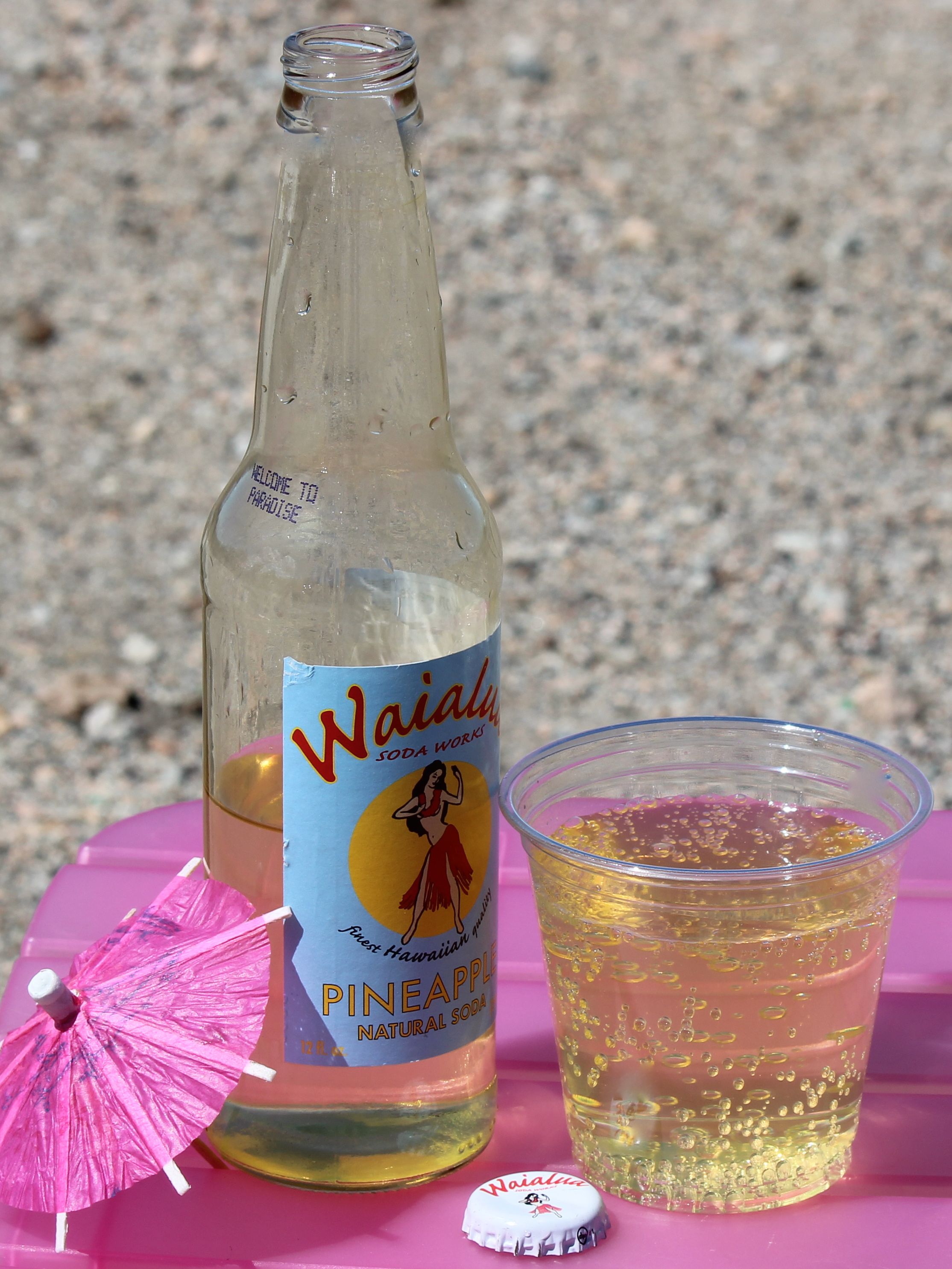
Hipahipa! (Click on the photo to read the fine print near the neck of the bottle.)

Hipahipa! (Click on the photo to read the fine print near the neck of the bottle.)

new business after heading across the Pacific from Southern California.

Hawaii has been a big soda-bottling state. Waialua began bottling pineapple soda in 2004 as a small-batch company. The Campbells mixed the ingredients, let them ferment in an ordinary refrigerator, sterilized the bottles and siphoned the soda into them. They could fill only 500 bottles a week; but soon they bought new equipment that let them do 700 bottles an hour.

The ingredients, the Campbells say, are all Hawaiian, except the bottles. Those come from Oregon because Hawaii doesn’t have a glassworks. The finished soda comes right back to Oregon and the other West Coast states, plus Virginia, Maryland and, naturally, Hawaii for retail. It can also be ordered from online soda stores.

What’s in it: Carbonated water, blend of Hawaiian and specifically Maui cane sugars, natural flavor, citric acid, beta carotene (color).

Appearance: Clear, rich gold like pineapple juice.

Aroma: Sweet, soft ripe pineapple scent

Flavor: Mild, feels light, tastes like a ripe pineapple.

Finish: Light, fast

Pairings: Don’t. Just kick off your slippers and sip it on the porch as the sun sets.

Notes: This soda’s delicacy and lack of pretension will transport you to the islands and leave you feeling happy.

Freelance more happily with leadership skills

Freelance writers and editors typically believe they have nothing to gain from 6.12.15 Sidebarbusiness leadership courses. They view themselves as creatives, not as business people.

They couldn’t be more wrong. Besides writing and editing, productive freelancers also do marketing, customer service, billing and collections, and basic people management.

Leadership courses can make even a one-person business more effective in all of these areas. Here’s how:

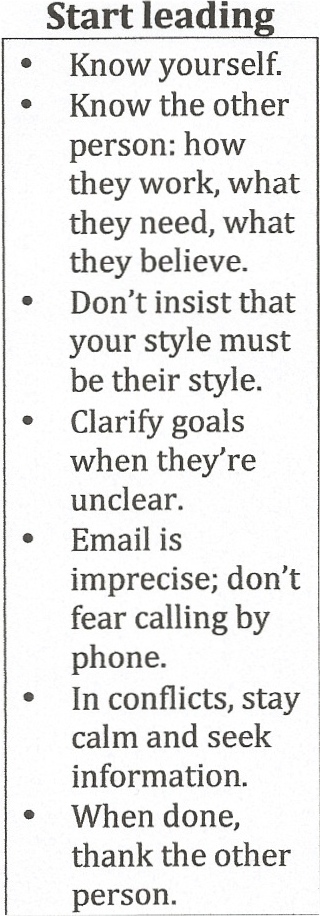
They teach you about yourself. Rarely do leadership courses fail to do a self-examination of habits, attitudes, values, expectations and goals. The idea is that success is predicated on self-knowledge – you can’t reach for the stars if you don’t realize that you’ve tied up your own hands., and you can’t influence others if you can’t manage yourself.

They teach you how all the things in the self-analysis affect your relationships with other people, such as editors, photographers and designers.

They provide strategies for oiling the gears of business relationships, whether it’s nailing down the scope of an assignment with an editor or collecting an overdue check from an accounts payable department.

Leadership is about influence – not bossiness, but about influencing other people to deliver what you want or need. Leadership courses teach goal-setting and how to keep your eye on the goal rather than going ballistic More

Throwback Thursday: State-of-the-art tools of the trade

With a 2 1/2-pound cell phone and a portable computer with a six-line screen, you’d have been HOT writing on the road 30 years ago.

The phone, a Motorola Dynatac 8000X, came with a charger the size of a

Motorola Dynatac 8000XTupperware sandwich box. To get around town, you’d punch a code into the phone to make and receive calls in a few-mile radius, put the phone in its holster and sling the holster over your shoulder. It felt heavy after a while, but that was the price of not having to carry change and hunt up pay phones. In other cities, you’d punch in a “roam” code — and your editor might tell you to use the phone sparingly because calls cost a bundle. The phone itself cost more than most diamond rings — $3,995.

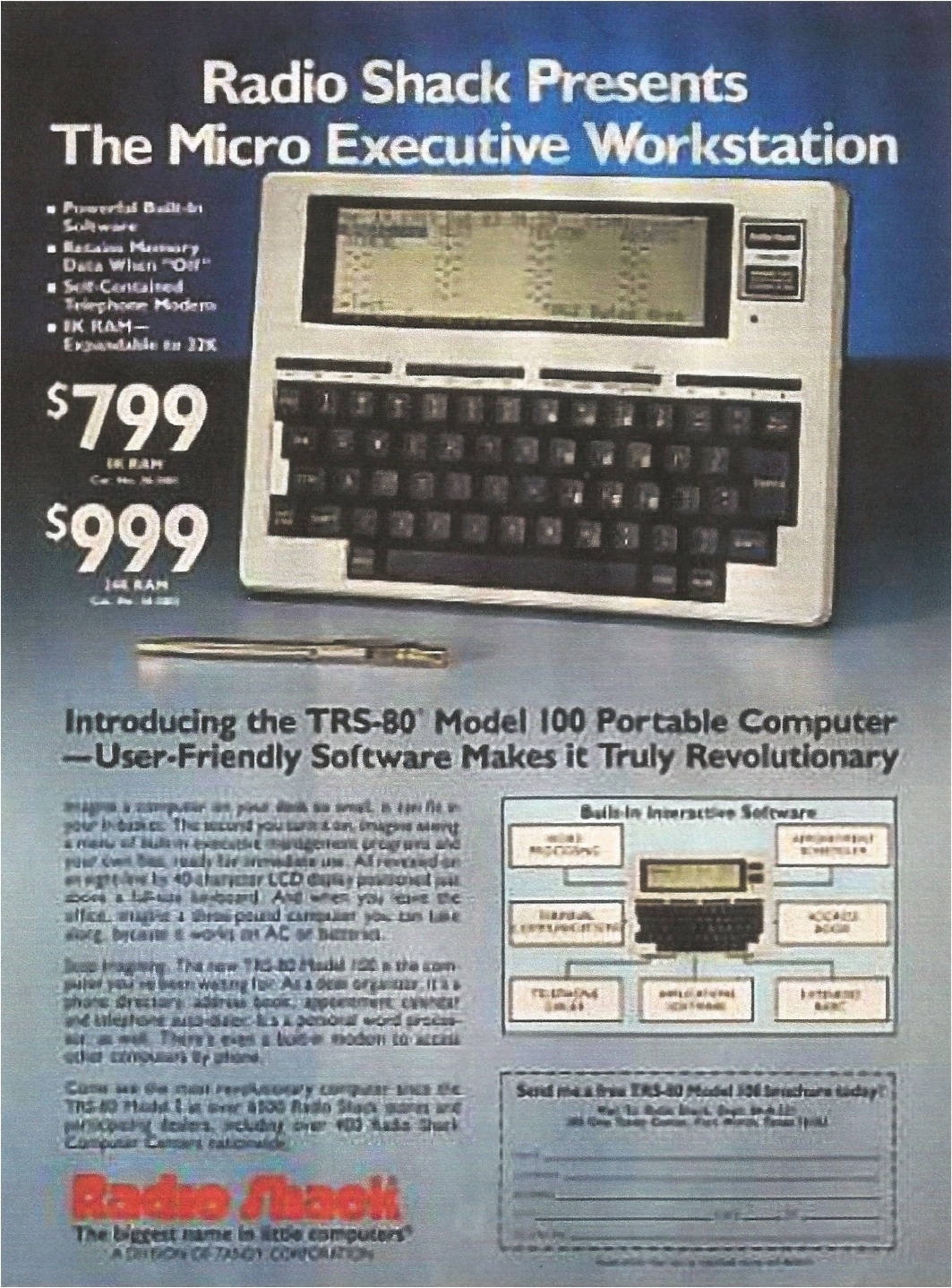
Your kit also contained a Radio Shack TRS-80 Model 100, which Radio Shack TRS 80 adreporters affectionately called the Trash-80 and made their workhorse on the road. What a marvel it was to sit in your hotel room and type your story, then connect the computer to your telephone via cup-shaped “acoustic couplers” on each end of the phone receiver and have the Trash-80 phone the Mother Ship’s computer and send the story, with each computer beeping happily. Software companies, new on the scene, sold chips that could put 10 lines of characters on the screen. Work could be saved on an external hard drive or printed out on a portable printer that used heat-activated paper and was small enough to fit into the turquoise Cordura Trash-80 case. By 1987, reporters began using other makers’ computers, some with fold-down lids containing big screens. On big stories, it was an experience to see a laptop that wasn’t a Trash-80 because Trash-80s were so popular.


Previous Older Entries Next Newer Entries

What day is it?

December 2025
S M T W T F S
 123456
78910111213
14151617181920
21222324252627
28293031